
"I came expecting a guided tour. I left with a family. The Unlock challenge broke down every wall — by the end of the day, we were swapping numbers."
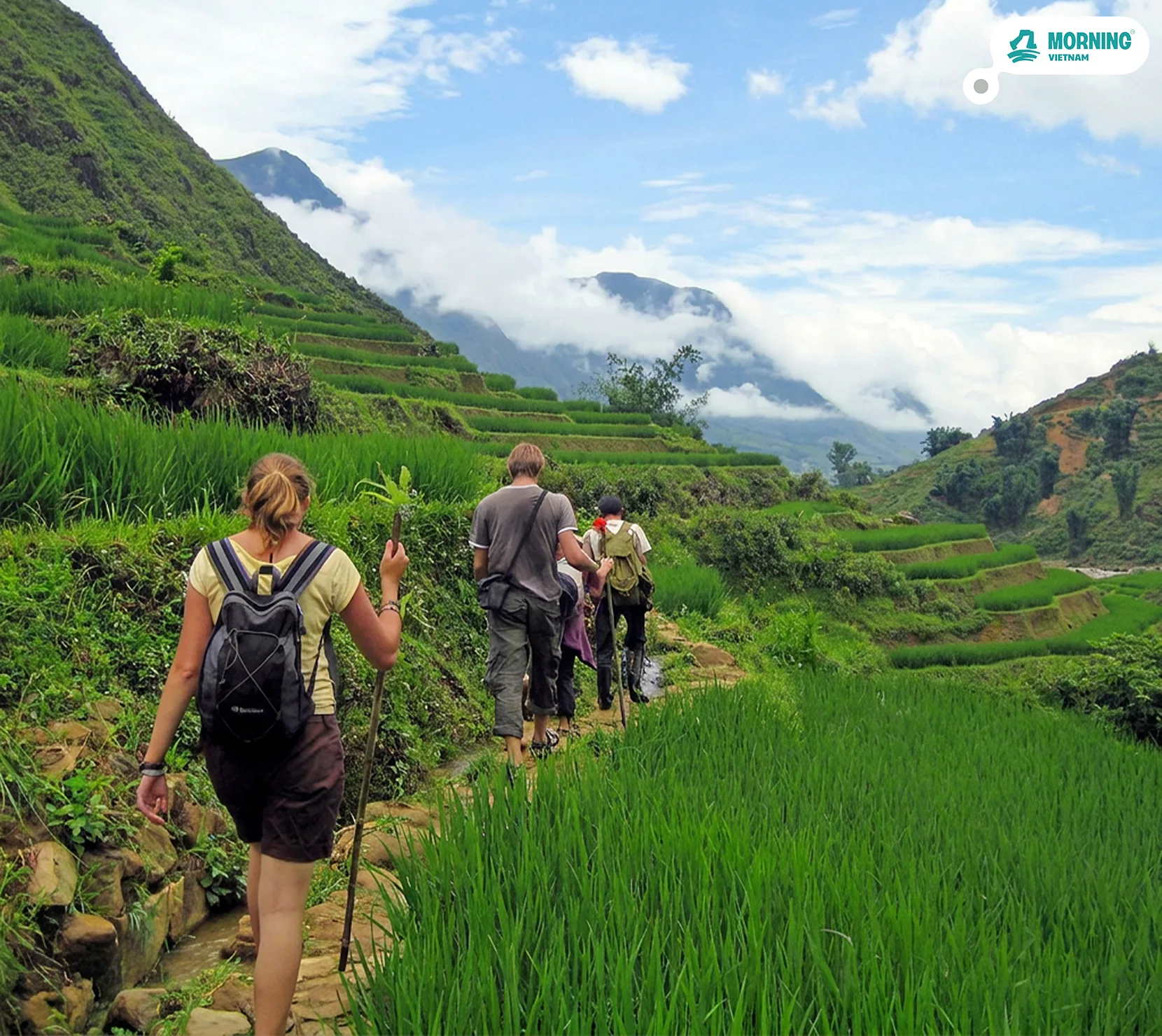
NORTH VIETNAM · 1 Day / 2D1N
Sa Pa · Nậm Cang
$52 / 1.360.000 VND /person
Sa Pa → Nậm Sài → rice terrace trek → Nậm Cang Red Dao village → back to Sa Pa by 17:30.
I'm in →
No payment now · Pay 14 days before · Free cancellation until then
Trip info
Meeting point
Sa Pa town centre · 08:30
Group size
3 – 12 people
Vehicle
Private car to Nậm Sài · trekking from there
Meals
Lunch at Nậm Cang included
Max altitude
~1,500m · Sa Pa area
Departure days
Thu & Sat · Flexible for groups of 3+
Unlock Challenge
Included
The pitch
Sa Pa has a hundred trekking routes. Nậm Cang is the one the coach tours don't reach.
The standard Sa Pa day involves a minibus, a viewpoint, Cat Cat Village, and a cable car queue. Nậm Cang is 30km further south — past the road the coaches take — in a valley where the rice terraces are still farmed by Red Dao families who have lived here for generations. No gift shops at the trailhead. No entrance gate. Just the fields, the village, and a morning's walk to get there.
The 1-day route starts at Nậm Sài and follows the terrace edges all the way to Nậm Cang. Two hours of walking that covers more actual Sa Pa landscape than most visitors see in a week. Lunch is cooked at the village. The Unlock Challenge runs in the afternoon, in the fields.
One day. The valley without the crowds.
Worth it?
$52. A full day in Nậm Cang — the valley the coach tours don't reach.
Included: private car Sa Pa ↔ Nậm Sài, full trekking route through the terraces, lunch at the village, dedicated Morning Vietnam host, Unlock Challenge, welcome pack. Min group 3, max 12.
Standard Sa Pa day tours charge $20–35 for Cat Cat Village + a viewpoint stop. This covers a route those operators don't run — because they don't have the local contacts to run it.
| Typical tour | Morning Vietnam | |
|---|---|---|
| Route | Cat Cat / Fansipan circuit | Nậm Sài → Nậm Cang terraces |
| Village access | Tourist village with gift shops | Working Red Dao community |
| Trekking | 30–60 min paved path | 2h+ through rice terrace edges |
| Lunch | Restaurant in Sa Pa town | Cooked in the village |
| Unlock Challenge | Not available | Included |
About this tour
Nậm Cang is where the Sa Pa tourist circuit ends and the real valley begins.
Most of the trekking routes out of Sa Pa converge on the same few villages within a few kilometres of town — places that have adjusted to tourism so thoroughly that the experience of 'local life' is largely a performance. Nậm Cang sits 30km further south, past the road the minibuses use, in a section of the Hoàng Liên Sơn range where the Red Dao community has had very little reason to rearrange itself for visitors.
The Red Dao are distinct from the H'Mông communities closer to Sa Pa town. The women's embroidery is more intricate, the headwear more elaborate, the knowledge of medicinal herbs deeper and more practically alive — the herbal bath tradition isn't a wellness product here, it's a functional practice that's been passed down for generations. You encounter all of this in the context of working village life, not a demonstration staged for tour groups.
The 2D1N route adds the Mường Hoa valley approach — through Ý Linh Hồ, a Black H'Mông settlement on the terrace edges above the valley floor, down to Tả Van for the night. Day 2 crosses from Tả Van to Giàng Tả Chải on foot, then connects to Nậm Cang by road and trail. Two days of walking that cover the full range of what the Sa Pa area actually contains, before most visitors have made it past the cable car.
The journey
A day, mapped.
Time across, elevation up. Every spike is a moment worth remembering.
Drive
08:30 – 10:00 · 1 Day
Sa Pa to Nậm Sài — The Road South
The drive from Sa Pa toward Nậm Sài takes 90 minutes along mountain roads that most tour vehicles never use. The route drops out of the Sa Pa plateau and into a lower valley system — the air changes, the vegetation changes, and the tourist circuit falls away behind you. Nậm Sài is a small H'Mông settlement at 868m, at the edge of the terrace system that connects down to Nậm Cang. This is where you leave the car and start walking.
Trek
10:00 – 12:00 · 1 Day
Nậm Sài to Nậm Cang — Through the Terraces
Two hours on foot through working rice terraces — not a loop trail, not a viewpoint path. The route descends from Nậm Sài at 868m to the Nậm Cang valley at 660m, following the edges of paddy fields that are actively farmed. The landscape is season-dependent: mirror-flat flooded fields in May, vivid green in July and August, deep gold in September and October. The trail is narrow in places and uneven underfoot — this is not a paved circuit. No other tour groups use this route.
Lunch
12:00 – 13:30 · 1 Day
Lunch at Nậm Cang — Cooked in the Village
Lunch is prepared by a Red Dao family in Nậm Cang — rice, local vegetables, whatever the season offers. Not a restaurant, not a tourist set menu. You eat in or around the family home, with time to sit and recover from the walk before the afternoon in the village. The food is simple and good. The setting is the point.
Village
13:30 – 16:00 · 1 Day
Nậm Cang — Red Dao Village
The Red Dao in Nậm Cang are one of the few communities in the Sa Pa region that have had limited exposure to organised tourism. The women's hand-embroidered indigo garments and layered headdresses are worn daily — not for visitors. The community maintains traditional herb gardens, practices indigo dyeing, and passes down medicinal knowledge through the women's line. Your host walks you through the village with introductions to the families, not a guided tour of crafts for sale.
Fields
16:00 – 17:30 · 1 Day
Terraced Fields — Last Light
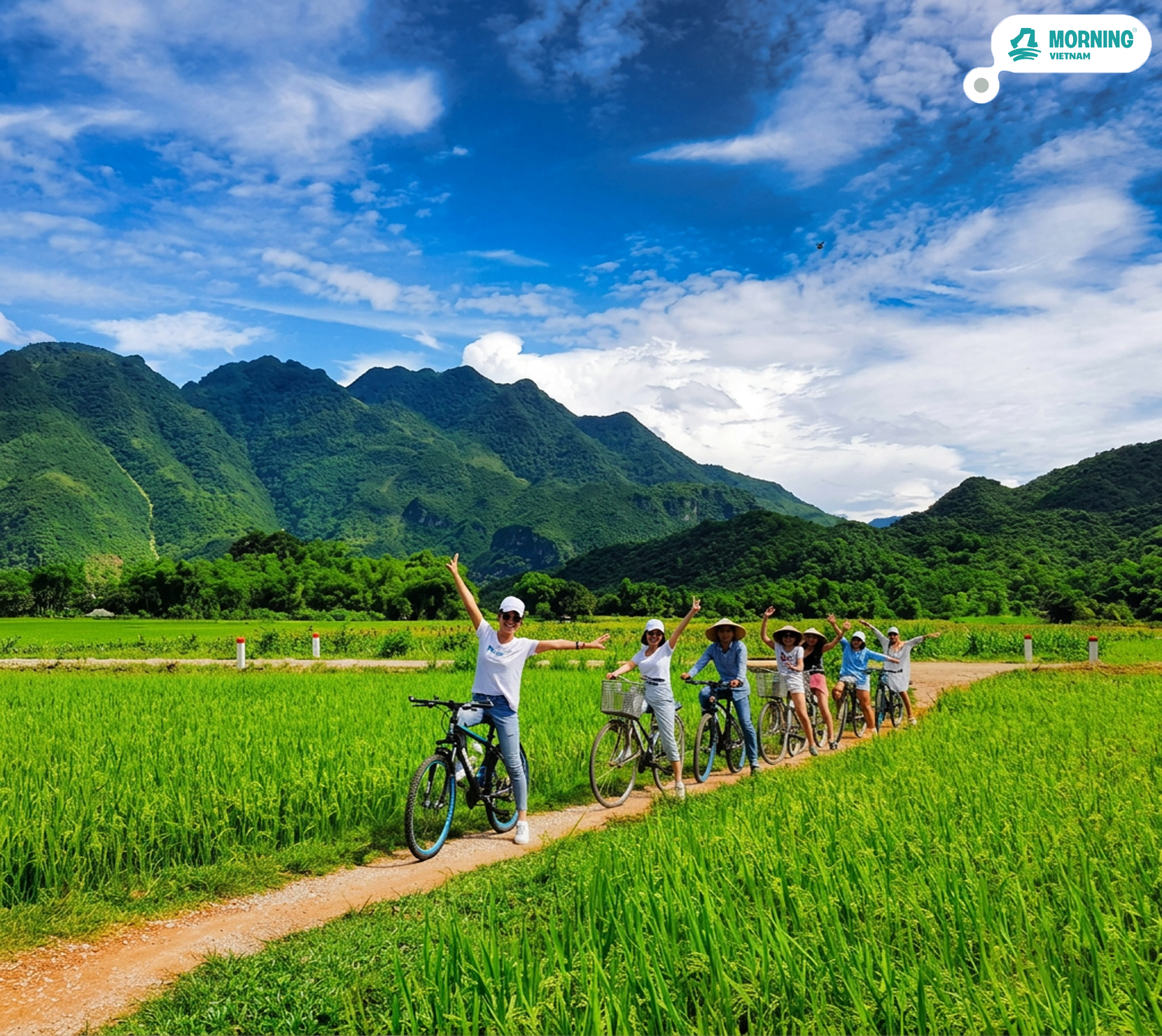
The final stretch before the drive back is unstructured time in the terraced fields above the village — the best light of the day, no schedule pressure, and the Unlock Challenge running somewhere in this window. The terraces at Nậm Cang are less photographed than those in the Mường Hoa valley, which means you have them to yourself. The drive back to Sa Pa takes about an hour from here.
Night Bus
06:30 – 13:30 · Day 1 (2D1N)
Hanoi to Sa Pa — Sleeper Bus Overnight
The 2D1N starts with a high-quality sleeper bus from Hanoi's Old Quarter at 06:30 — not the cheapest option on the road, and worth it. Lie-flat berths, air conditioning, roughly 7 hours. You arrive in Sa Pa by early afternoon, eat lunch, and meet your host before the afternoon trek begins. It's a long travel day compressed into a window that leaves both days free for walking.
Trek
15:15 – 18:30 · Day 1 (2D1N)
Ý Linh Hồ to Tả Van — Mường Hoa Valley Descent
The afternoon of Day 1 is the full Mường Hoa valley descent — starting at Ý Linh Hồ (1,330m), a Black H'Mông settlement on the terrace hillside, and ending at Tả Van on the valley floor (1,070m). Three hours of walking through wild rice terraces, bamboo forest, and open hillside with the Hoàng Liên Sơn peaks above. This is the classic Sa Pa trekking landscape — unmodified and mostly free of tourist infrastructure. You arrive at the homestay as the light leaves the mountains.
Homestay
18:30 – 08:00 · Night (2D1N)
Tả Van Homestay — H'Mông Family
The night is spent at a local H'Mông family homestay in Tả Van — a village at the bottom of the Mường Hoa valley. Dinner is cooked by the family: rice, vegetables grown in the valley, occasionally chicken or pork. The house is traditional in structure. The experience is not curated — you sleep in a family home in a working village, not a boutique property. In the morning you eat breakfast with the family and set out on foot toward Giàng Tả Chải.
Trek
08:30 – 10:30 · Day 2 (2D1N)
Tả Van to Giàng Tả Chải — Morning Trek
Day 2 starts on foot from the homestay. The route crosses from Tả Van to Giàng Tả Chải — two hours through the lower valley, rice fields, and a section of forested hillside. At 990m, Giàng Tả Chải sits slightly above Tả Van. The morning light on the terraces is the best of the day. From Giàng Tả Chải you board a vehicle for the drive to Nậm Sài, where the second major trek begins.
Trek
11:30 – 13:30 · Day 2 (2D1N)
Nậm Sài to Nậm Cang — The Terrace Route
The same route the 1 Day option uses — from Nậm Sài at 868m down through the rice terraces to Nậm Cang at 660m. After a morning of walking from the homestay, this is the second half of a full day on foot. The Nậm Cang terraces are quieter and less visited than those in the Mường Hoa valley. The route is narrow, uneven, and passes through working paddy fields. No other tour groups are on it.
Village
13:30 – 16:45 · Day 2 (2D1N)
Nậm Cang — Red Dao Community & Terraced Fields
Lunch in the village, then time with the Red Dao community — the same cultural experience as the 1 Day option, but arrived at after two days of walking through three distinct ethnic communities: Black H'Mông at Ý Linh Hồ, H'Mông at Tả Van, and Red Dao here. The contrast is the point. The Unlock Challenge runs in the terraced fields in the afternoon before the drive back to Sa Pa.
Herb Bath
17:45 – 18:45 · Day 2 (2D1N)
Red Dao Herbal Bath — Sa Pa
The day ends with a Red Dao herbal bath in Sa Pa — a blend of 10–12 mountain herbs prepared by Red Dao women, used for centuries to treat muscle fatigue and joint pain after fieldwork. The preparation is authentic: the herbs are the same ones used in the villages, sourced from the hills above Sa Pa, not a commercial formula. About 45 minutes in a wooden tub. After two full days of trekking through the valley, the timing makes sense.
Your welcome pack
Everything in your bag has a reason.
At the start of the day, your host hands you a Morning Vietnam pack. One item earns its place on the terrace walk.
🥖
Pork Floss Bread · Bánh ruốc
A light breakfast that's very much a Vietnamese thing — soft bread, fluffy pork floss, zero pretension. The kind of snack that makes locals nostalgic and visitors confused in the best way.
🍘
Rice Cracker · Bánh gạo
Road snack. Crunchy, light, oddly addictive. Perfect for the stretch of highway where the scenery gets good and you need something to do with your hands.
🍬
Ginger Candy · Kẹo gừng
Vietnamese mountain roads don't do straight lines. This little candy does more for motion sickness than any pill — and it actually tastes good. Don't skip it.
💧
Water · Nước suối
To get you started. The day earns you a refill.
🪭
Paper Hand Fan · Quạt giấy
For the valley heat. Hand-painted. Yours to keep.
🧵
Brocade Bracelet · Vòng tay thổ cẩm
Everyone on the trip wears one. It's how you find your people at the Unlock Challenge — and a pretty decent souvenir that you didn't have to buy in a gift shop.
♻️
Recycled MVN Bag · Túi tái chế MVN
Everything we just gave you came in this. Because if we're going to hand you a welcome pack, we're going to do it without adding to the pile. Small choice. Matters anyway.

Signature format
The Unlock Challenge.
Every Morning Vietnam tour has one. A moment that turns your group from strangers into a team. You won't be told the rules — that's the whole point.
1
Wear the wristband
On the morning of the tour, your guide hands every traveler a Morning Vietnam wristband. It's how the game knows you're playing.
2
A clue enters the day
Somewhere during the trip — your guide won't say when — a card, a signal, or an object enters the picture. From that moment, the game has started.
3
Read it. Move on it. Together.
Your group has to figure out what to do next. No GPS. No guidance from the guide. Just eyes, instinct, and each other. Win or not, you'll remember this part.
Travelling solo or in pairs? The challenge adapts. The valley doesn't care how many of you there are — only that you're paying attention.
When to go
By season.
Nậm Cang's rice terraces change dramatically by season. The route is walkable year-round — what you see changes everything.
Best conditions Good, some haze Wet season — still doable
Rice season peak (May – Oct)
May–Jun: flooded fields, mirror reflections, transplanting season — the terraces are at their most alive. Jul–Aug: vivid green, full growth, cloud season (expect mist — it adds to the atmosphere). Sep–Oct: golden harvest, the most photographed landscape in northern Vietnam. This is the window most people come for.
Dry season (Nov – Apr)
The terraces are quieter and drier. Jan–Feb can bring cold fog and occasional frost at altitude — bring layers. Mar–Apr: plum and peach blossoms in the valley. The trek is easier underfoot, the light is cleaner, and the village is calmer. A different experience, not a worse one.
Real travelers, real reviews
4.9
Based on 32 reviews
5★29
4★2
3★1
2★0
1★0
"Most tours feel like a museum on wheels. Morning Vietnam feels like a homecoming. The host didn't perform Vietnam — he let us in."
"Eight people, one van, three days. We have a WhatsApp group that's still active a year later. That's it. That's the review."

Your moment.
Your Vietnam.
Tours that don't perform the country to you — they let you in.
See all tours →Ready to go?
Sa Pa · Nậm Cang
from $52 / 1.360.000 VND /person
No payment now — reserve your spot, pay 14 days before. Free cancellation.
Which option should I choose — 1 Day or 2D1N?
1 Day is right if you're based in Sa Pa and want a full day in the Nậm Cang valley without the overnight. 2D1N is the fuller picture: it starts from Hanoi, adds the Mường Hoa valley approach via Ý Linh Hồ and Tả Van, and covers two different ethnic communities (Black H'Mông + Red Dao) across two days of proper trekking. The herb bath on Day 2 is a good reason to choose it on its own.
How hard is the trekking?
Moderate — suitable for anyone with reasonable fitness. The 1 Day route is 2–3 hours of walking on uneven terrace paths with some elevation change. The 2D1N adds a longer Day 1 descent (3h+) through the Mường Hoa valley. No technical sections. Trekking poles are useful but not required. Minimum age 12.
What is the Red Dao herbal bath?
A medicinal bath using a blend of 10–12 mountain herbs traditionally prepared by Red Dao women — used for centuries to treat fatigue and sore muscles after fieldwork. On the 2D1N, it's included at the end of Day 2 in Sa Pa. About 45 minutes of soaking in a wooden tub. You'll want it after two days of walking.
What is the best time of year for the rice terraces?
Sep–Oct for golden harvest colour. May–Jun for flooded mirror-field reflections during transplanting season. Jul–Aug for vivid green and moody cloud conditions. The route is walkable year-round — what changes is what the terraces look like.
Do I need to be fit?
Moderate fitness recommended. Most activities are walking/cycling at a relaxed pace, but some sections may include 30–60 min of uphill.
What's included in the price?
All transport, all meals, accommodation (if multi-day), all activity fees, dedicated host. You only need spending money.
When do I pay?
Reserve your spot first — no payment upfront. Pay 14 days before departure. Free cancellation until then.
Be first to know.
Drop your email/whatsapp number — we'll tell you the day this tour goes live. No spam, no marketing fluff.