
"I came expecting a guided tour. I left with a family. The Unlock challenge broke down every wall — by the end of the day, we were swapping numbers."
NORTH VIETNAM · 2D1N
Sa Pa Trekking Classic
$67 / 1.750.000 VND /person
Sleeper bus upgrade
+$4/person/way · Your own private sleeping cabin
Hanoi → Sa Pa · Ý Linh Hồ → Lao Chải → Tả Van homestay · Giàng Tả Chải → Hanoi.
I'm in →
No payment now · Pay 14 days before · Free cancellation until then
Trip info
Pickup
Old Quarter, Hanoi · 06:30 sleeper bus
Group size
3 – 12 people
Vehicle
Sleeper bus (HN ↔ Sa Pa) + private car + trekking
Meals
Lunch + dinner Day 1 · breakfast + lunch Day 2
Accommodation
H'Mông local homestay · Tả Van village
Max altitude
~1,500m · Sa Pa area
Departure days
Mon · Flexible for groups of 3+
Unlock Challenge
Included
The pitch
The Mường Hoa valley is Sa Pa's signature landscape. Most people see it from a minibus window. This is two days inside it.
The standard Sa Pa day tour goes roughly like this: minibus, viewpoint, one village loop, cable car optional. You cover ground quickly, you photograph a lot, and by evening you're back in town with a sense that you saw Sa Pa without quite having been in it.
The Trekking Classic runs a different logic. Day 1 starts late afternoon — you arrive from Hanoi, eat in town, then the walking begins at 14:45. Three villages in sequence: Ý Linh Hồ on the terraced hillside, Lao Chải in the valley, Tả Van where the path ends and the homestay begins. Dinner is cooked by the family. You sleep in the village.
Day 2 starts at 08:00 and goes deeper — through the bamboo forest to Giàng Tả Chải, a smaller, quieter settlement most tour groups don't reach. Lunch in the bản, then car back to Sa Pa and the evening bus to Hanoi. Two days, one valley, the full ground-level picture.
The Mường Hoa valley is exactly as good as people say. The trick is being in it, not above it.
Worth it?
$67. Two days in the Mường Hoa valley — Hanoi, three villages, homestay, all meals included.
Included: sleeper bus Hanoi ↔ Sa Pa (both ways), private car where needed, all meals from Day 1 lunch through Day 2 lunch, H'Mông homestay at Tả Van, dedicated host both days, Unlock Challenge, welcome pack. No hidden fees.
The standard market for this format — 2 days, Hanoi bus, homestay, guide — runs $56–89 depending on operator and group size. Morning Vietnam runs max 8 people, no joined groups, local host (not a hired agency guide). The price sits in the middle of the market for a product that's built differently.
| Typical tour | Morning Vietnam | |
|---|---|---|
| Group size | Up to 20+ (joined groups) | Max 12 · no joined groups |
| Guide | Agency guide | Morning Vietnam local host |
| Villages | 2 (Y Linh Ho + Ta Van) | 3 + Giàng Tả Chải Day 2 |
| Homestay | Basic bungalow or guesthouse | H'Mông family homestay · Tả Van |
| Meals | Lunch only | Lunch + dinner + breakfast + lunch |
| Unlock Challenge | Not available | Included |
About this tour
The Mường Hoa valley is where Sa Pa's landscape becomes something you walk through, not look at.
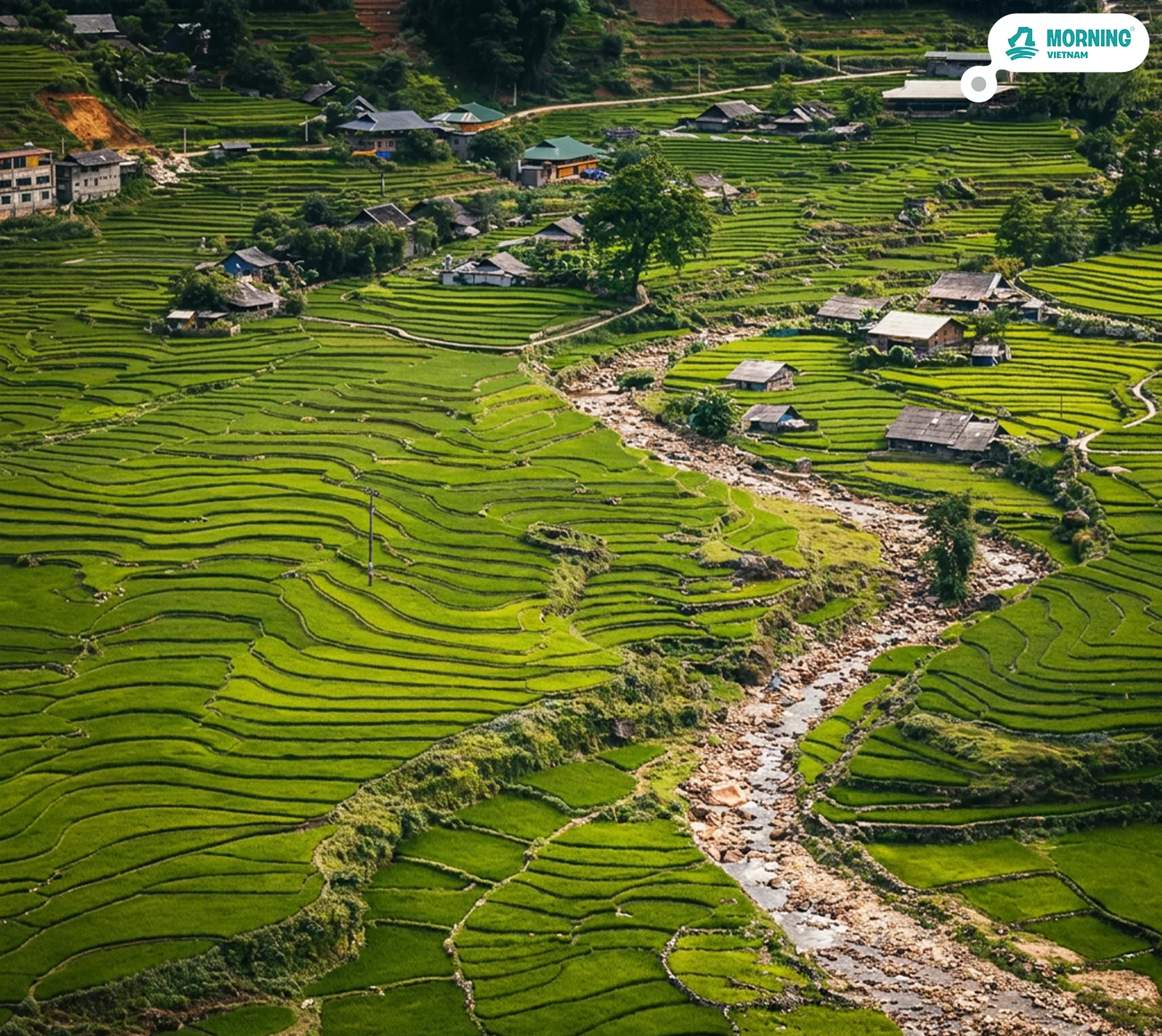
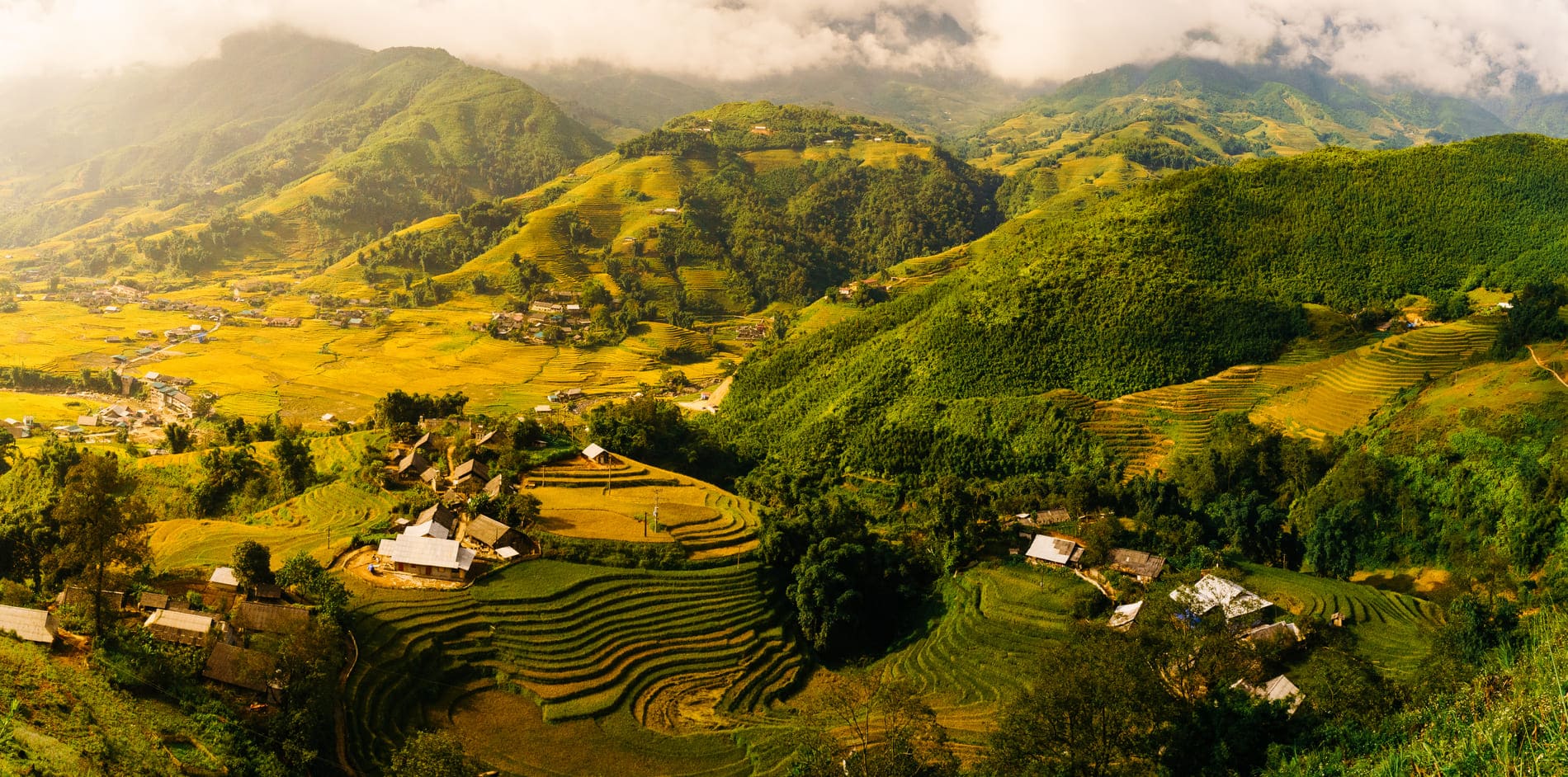
Sa Pa sits at 1,500m on the edge of the Hoàng Liên Sơn range. Below it, the Mường Hoa valley drops in a series of terraced steps — rice fields stacked against hillsides, cultivated by Black H'Mông families who have farmed this land for generations. The valley is about 20km long and 300m lower than the town above it. Most visitors see it from the top.
Ý Linh Hồ is the first village south of Sa Pa on the valley's eastern ridge — a Black H'Mông settlement at about 1,330m, perched where the terraces begin their descent. The path from here follows the terrace edges down through Lao Chải, another H'Mông village in the valley centre, and then across the valley floor to Tả Van at 1,070m. The entire descent covers roughly 8–10km on foot.
Tả Van is where the night is. The village sits at the meeting point of the Mường Hoa River and several smaller streams — a flat pocket of valley floor surrounded by terraces on three sides. The homestay is a working family home, not a guesthouse. Dinner is northwestern Vietnamese cooking: rice, vegetables, pork or chicken from the yard, rice wine if you want it.
Giàng Tả Chải on Day 2 is the furthest point into the valley on this route — a small H'Mông settlement across a bamboo-forested hillside from Tả Van. The path cuts through the forest before opening out onto views across the full width of the valley. Lunch is cooked in the village. The car back to Sa Pa takes 30–45 minutes from the main road. By late afternoon you're on the bus back to Hanoi.
The journey
A day, mapped.
Time across, elevation up. Every spike is a moment worth remembering.
Night Bus
06:30 – 13:30 · Day 1
Hanoi to Sa Pa — Sleeper Bus
The journey starts with a high-quality sleeper bus from Hanoi's Old Quarter at 06:30 — lie-flat berths, air conditioning, roughly 7 hours to Sa Pa. You arrive in time for a late lunch before meeting your host and starting the afternoon trek. The same bus brings you back on Day 2 evening, departing Sa Pa at 15:30 and arriving Hanoi by 21:30.
Trek
15:15 – 18:30 · Day 1
Ý Linh Hồ → Lao Chải → Tả Van
The main trek of Day 1 covers three villages in sequence, descending roughly 430m through the Mường Hoa valley. Starting at Ý Linh Hồ (1,330m) — a Black H'Mông settlement on the terrace hillside — the path drops through open rice fields to Lao Chải (1,100m), another H'Mông village in the valley centre. From there it follows the valley floor through terraced paddies to Tả Van (1,070m). About 8–10km on foot, 3 hours including rests. The classic Sa Pa trekking route — walked by locals for generations, not built for tourism.
Homestay
18:30 – 08:00 · Night
Tả Van — H'Mông Homestay
The night is at a local H'Mông family homestay in Tả Van village. Dinner is cooked by the host: rice, vegetables from the garden, pork or chicken, northwestern Vietnamese dishes. The house is a working family home — wooden construction, communal dining, shared sleeping arrangements in the traditional style. Breakfast in the morning before the Day 2 trek departs. Tả Van sits at 1,070m at the valley floor — in clear weather, the terrace hillsides above the village are visible from the front of the house.
Trek
08:45 – 10:00 · Day 2
Tả Van to Giàng Tả Chải — Through the Bamboo Forest
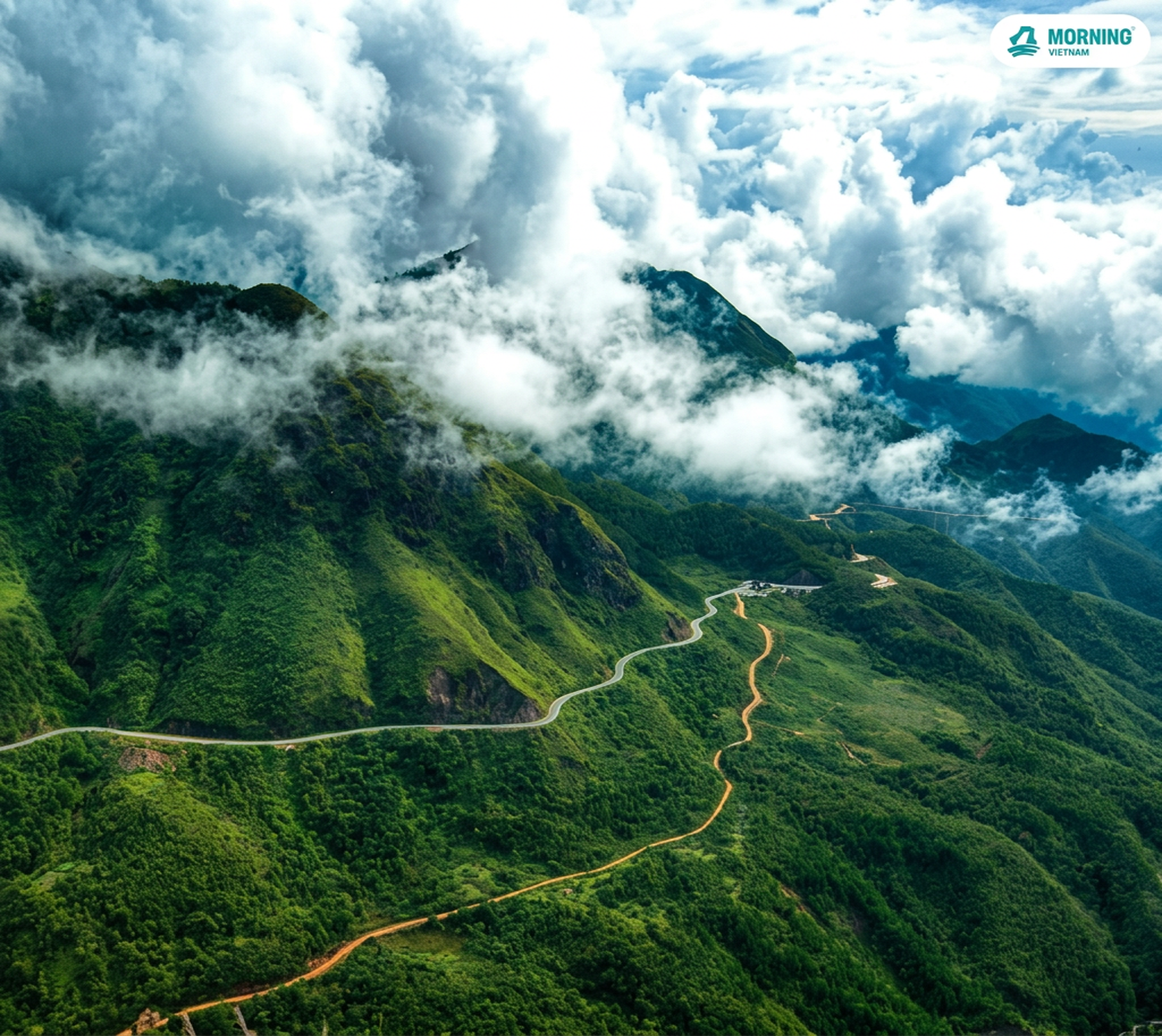
Day 2's trek is shorter and quieter than Day 1's. The path from Tả Van climbs slightly before entering a section of dense bamboo forest — cool, canopied, a different texture from the open terrace walking of the previous afternoon. After the forest the route opens onto a hillside with views across the full width of the Mường Hoa valley before descending to Giàng Tả Chải at 990m. About 75 minutes of walking.
Village
10:00 – 13:00 · Day 2
Giàng Tả Chải — The End of the Valley
Giàng Tả Chải is a Black H'Mông village at the far end of the valley circuit — smaller and less visited than Tả Van or Lao Chải. The path into the village crosses a small bridge over the Mường Hoa River. Time here is unstructured: walking through the village, talking to the families through your host, watching what's happening at the time of year you arrive. Lunch is cooked in the bản — rice, local vegetables, whatever's in season. The Unlock Challenge runs somewhere in this window.
Return
13:00 – 15:30 · Day 2
Back to Sa Pa — Free Time Before Bus
The car picks up at the main road above Giàng Tả Chải and takes 30–45 minutes to reach Sa Pa town. From 13:00 to 15:30 is free time — use it however you want: coffee at a local café, walking the Sa Pa market, or just sitting at the viewpoint before the bus south. The evening bus departs at 15:30 and arrives in Hanoi Old Quarter by 21:30.
Your welcome pack
Everything in your bag has a reason.
Your host hands you a Morning Vietnam pack at the start of the trek. One item was chosen specifically for a day that ends in someone else's house.
🥖
Pork Floss Bread · Bánh ruốc
A light breakfast that's very much a Vietnamese thing — soft bread, fluffy pork floss, zero pretension. The kind of snack that makes locals nostalgic and visitors confused in the best way.
🍘
Rice Cracker · Bánh gạo
Road snack. Crunchy, light, oddly addictive. Perfect for the stretch of highway where the scenery gets good and you need something to do with your hands.
🍬
Ginger Candy · Kẹo gừng
Vietnamese mountain roads don't do straight lines. This little candy does more for motion sickness than any pill — and it actually tastes good. Don't skip it.
💧
Water · Nước suối
To get you started. The day earns you a refill.
🪭
Paper Hand Fan · Quạt giấy
For the valley heat. Hand-painted. Yours to keep.
🧵
Brocade Bracelet · Vòng tay thổ cẩm
Everyone on the trip wears one. It's how you find your people at the Unlock Challenge — and a pretty decent souvenir that you didn't have to buy in a gift shop.
♻️
Recycled MVN Bag · Túi tái chế MVN
Everything we just gave you came in this. Because if we're going to hand you a welcome pack, we're going to do it without adding to the pile. Small choice. Matters anyway.

Signature format
The Unlock Challenge.
Every Morning Vietnam tour has one. A moment that turns your group from strangers into a team. You won't be told the rules — that's the whole point.
1
Wear the wristband
On the morning of the tour, your guide hands every traveler a Morning Vietnam wristband. It's how the game knows you're playing.
2
A clue enters the day
Somewhere during the trip — your guide won't say when — a card, a signal, or an object enters the picture. From that moment, the game has started.
3
Read it. Move on it. Together.
Your group has to figure out what to do next. No GPS. No guidance from the guide. Just eyes, instinct, and each other. Win or not, you'll remember this part.
Travelling solo or in pairs? The challenge adapts. The valley doesn't care how many of you there are — only that you're paying attention.
When to go
By season.
The Mường Hoa valley is walkable year-round. What changes is what the terraces look like and how the path feels underfoot.
Best conditions Good, some haze Wet season — still doable
Rice season (May – Oct)
May–Jun: flooded terraces, mirror reflections, transplanting season. Jul–Aug: full green growth, mist and cloud. Sep–Oct: golden harvest — the most photographed period in Sa Pa, for good reason. The trail is muddier after rain but the valley is at its most alive.
Dry season (Nov – Apr)
Drier, clearer, easier underfoot. Jan–Feb brings cold and occasional frost at altitude — the homestay is warmer than it looks. Mar–Apr: plum and peach blossom season, the terraces start to green up. Fewer tourists than peak season.
Real travelers, real reviews
4.9
Based on 32 reviews
5★29
4★2
3★1
2★0
1★0
"Most tours feel like a museum on wheels. Morning Vietnam feels like a homecoming. The host didn't perform Vietnam — he let us in."
"Eight people, one van, three days. We have a WhatsApp group that's still active a year later. That's it. That's the review."

Your moment.
Your Vietnam.
Tours that don't perform the country to you — they let you in.
See all tours →Ready to go?
Sa Pa Trekking Classic
from $67 / 1.750.000 VND /person
No payment now — reserve your spot, pay 14 days before. Free cancellation.
How difficult is the trekking?
Moderate. Day 1 is roughly 8–10km downhill through the Mường Hoa valley — 3 hours of walking with elevation loss of about 430m. Day 2 is shorter (5–6km, 75 min to Giàng Tả Chải). Paths are mostly dirt and uneven in places, particularly after rain. Suitable for anyone with normal fitness. Not recommended for people with knee issues (Day 1 descent). Trekking poles are useful but not required.
What is the homestay like?
A local H'Mông family home in Tả Van village — wooden construction, basic facilities, communal sleeping area. Not a guesthouse or bungalow. You eat with the family, sleep under the same roof, and leave in the morning. If you're expecting hotel-style amenities, this isn't the right tour. If you want to understand what Tả Van actually is, this is the only way to do it.
What's included in the price?
Sleeper bus Hanoi ↔ Sa Pa (both ways), private car where needed, all meals from Day 1 lunch through Day 2 lunch (4 meals total), H'Mông homestay at Tả Van, dedicated Morning Vietnam host for both days, all entrance and activity fees, Unlock Challenge, welcome pack. The only extras are personal spending and tips.
Can I join this tour solo?
Yes — we run joined groups of up to 8 people, so solo travelers book the same way as groups. Minimum 3 people to confirm departure. If you're traveling alone and want to guarantee a specific date, contact us and we'll confirm availability.
What's the best time of year?
Sep–Oct for golden rice terraces. May–Jun for flooded mirror fields. Mar–Apr for blossom season and clear skies. The route is walkable year-round — Dec–Feb is cold (3–7°C at night in the valley) but doable with layers.
Be first to know.
Drop your email/whatsapp number — we'll tell you the day this tour goes live. No spam, no marketing fluff.