

"I came expecting a guided tour. I left with a family. The Unlock challenge broke down every wall — by the end of the day, we were swapping numbers."
NORTH VIETNAM · 2D1N
Putaleng — Only Trekking
$113 / 2.950.000 VND /person
Next departures
I'm in →
No payment now · Pay 14 days before · Free cancellation until then · Hanoi pickup +450,000₫/person
Trip info
Pickup
Sa Pa hotel · 06:15 · or Hanoi pickup +450,000₫/person
Group size
3 – 12 people · joined or private group
Transport
Private car Sa Pa → Tà Lèng · motorbike taxi to trailhead · car Sì Thâu Chải → Sa Pa
Meals
Day 1: lunch + dinner · Day 2: full board
Accommodation
Mountain shelter (~2,522m) · mat, blanket provided
Summit
Putaleng 3,049m · 3rd highest in Vietnam
Trek
~23km traverse · 1,300m gain Day 1 · 900m gain Day 2
Duration
2 days 1 night · starts Sa Pa morning
Required
Original passport or national ID · may be checked at forest checkpoints
The pitch
Two days. One summit. The wildest forest trek in Vietnam.
If Fansipan is the most famous Vietnamese summit, Putaleng is the one serious trekkers describe differently.
- The Tà Lèng approach from the Lai Châu side is wilder and less infrastructure-heavy than any other route up a top-10 Vietnamese peak — motorbike taxi to the trailhead, then primary old-growth all the way to 3,049m
- Descent via Rhododendron Peak ridge (~2,400m) adds a second high point and changes the route completely — this is a true traverse through 30+ rhododendron species, not an out-and-back
- Finish in Sì Thâu Chải — a Red Dao village — with a traditional herbal bath: a functional recovery practice that the Dao have used for generations after physical exertion in these mountains
How tough is it?
4 /5
Hard
Two big trekking days through primary old-growth forest on a trail with no tourist infrastructure. Right for fit, experienced walkers — not a beginner's first mountain.
Physical demand
Day 1 gains 1,300m over ~10km from trailhead to summit, then descends to the shelter — expect 8–9 hours total. Day 2 descends 900m over 13km with a partial re-ascent to Rhododendron Peak. ~23km total traverse.
Altitude & terrain
Summit at 3,049m is high enough to feel, but the overnight shelter sits at ~2,522m — well below the range where altitude sickness becomes a serious risk. No technical climbing; the challenge is distance and terrain.
Remoteness
Primary forest with no road access between the Tà Lèng trailhead and Sì Thâu Chải. Phone signal unreliable above roughly 2,000m. Genuine backcountry — not a marked park trail.
Route map
Where the trail actually goes.
↻ Drag compass to rotate
Satellite imagery via Esri · actual GPS track recorded on this route
The journey
The journey, mapped.
Time across, elevation up. Every spike is a moment worth remembering.
⏱ Time markers are estimates — actual pace depends on each group's fitness level.
Trek
09:00 – 16:00 · Day 1
Tà Lèng → Primary Forest → Putaleng 3,049m
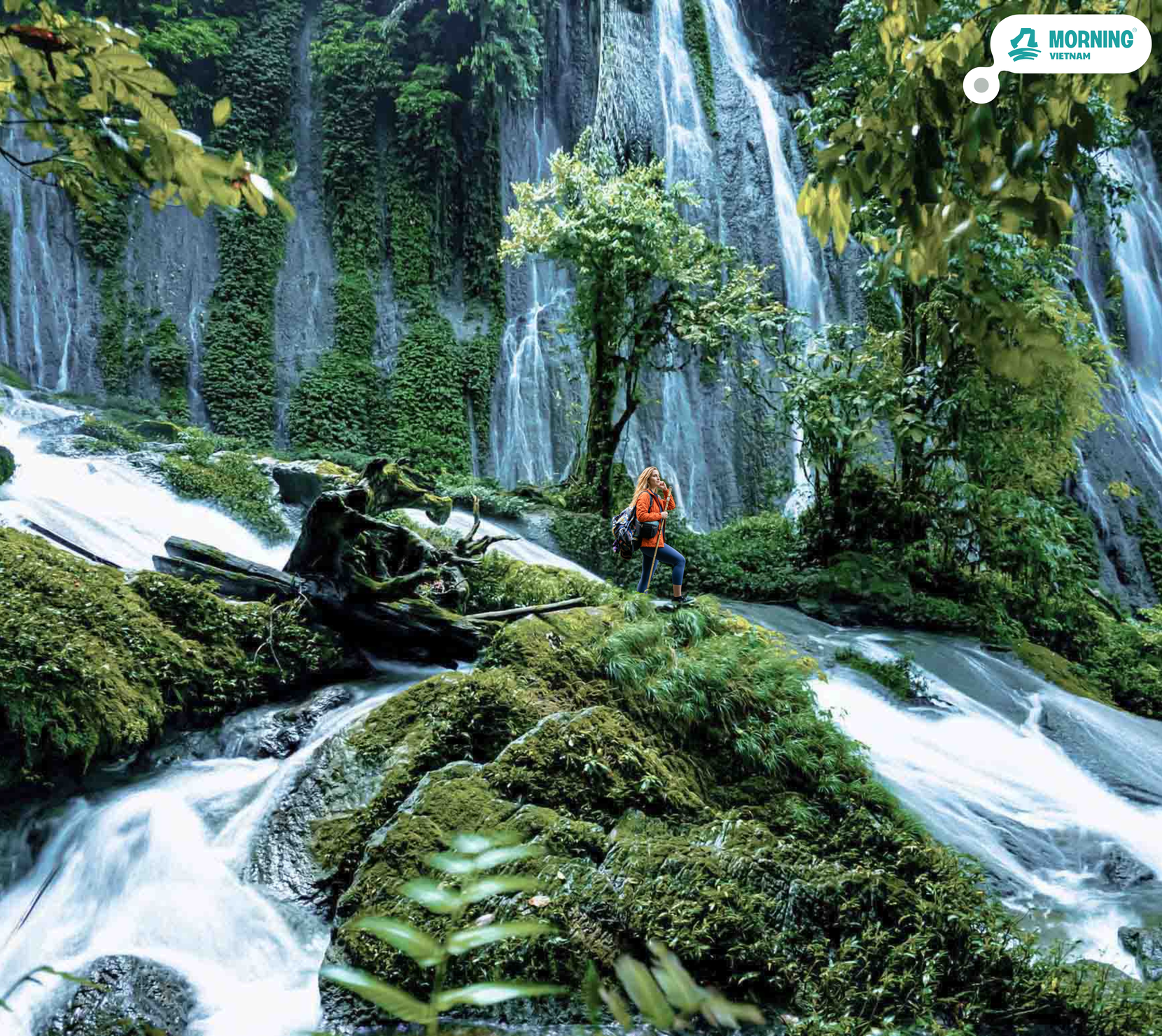
The motorbike taxi ride to the trailhead at 1,700m is itself a transition — from the valley road to the forest edge in 30 minutes of steep mountain track. From there the trek gains 1,300m over roughly 10km to the summit. The lower section runs through primary cloud forest: mossy, dense, the canopy continuous, streams crossing the trail. The bamboo opens above 2,000m. Above the shelter at 2,522m the forest thins into alpine scrub and the views begin. The summit at 3,049m is an afternoon summit — the light across the Hoàng Liên range at this hour is different from dawn. Descent back to the shelter takes 2 hours.
Shelter
19:00 – 06:30 · Night
Mountain Shelter — ~2,522m
The shelter at 2,522m is a basic wooden structure — mats, blankets, basic toilet facilities. The temperature at this altitude drops to 8–15°C at night in warm months, below freezing in winter. The forest is quiet at this elevation after dark; the sound is wind and the occasional stream. Breakfast is ready at 06:30. The descent begins at 07:00.
Rhododendron Ridge
07:00 – 12:00 · Day 2
Rhododendron Peak — descent ridge at 2,400m
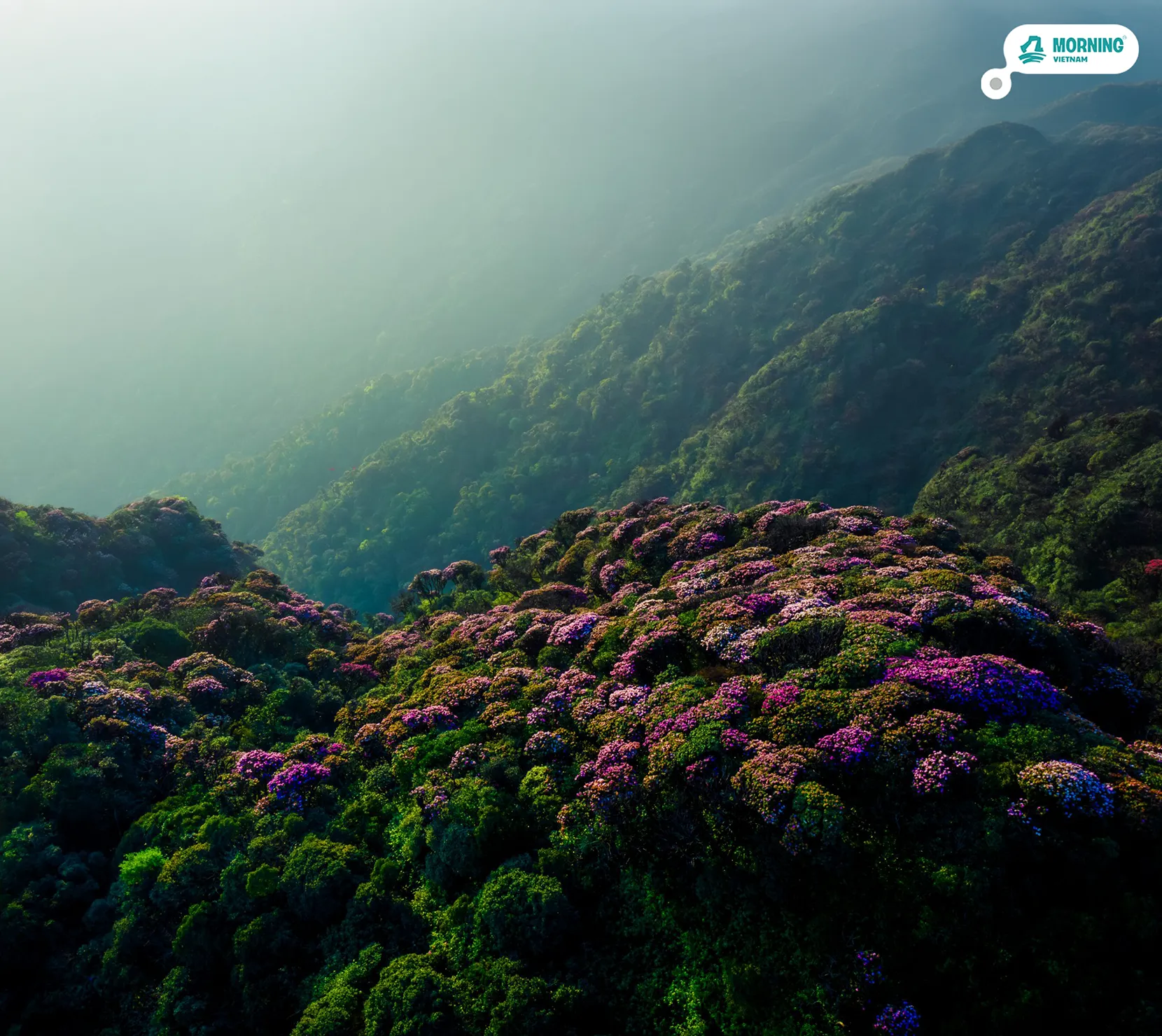
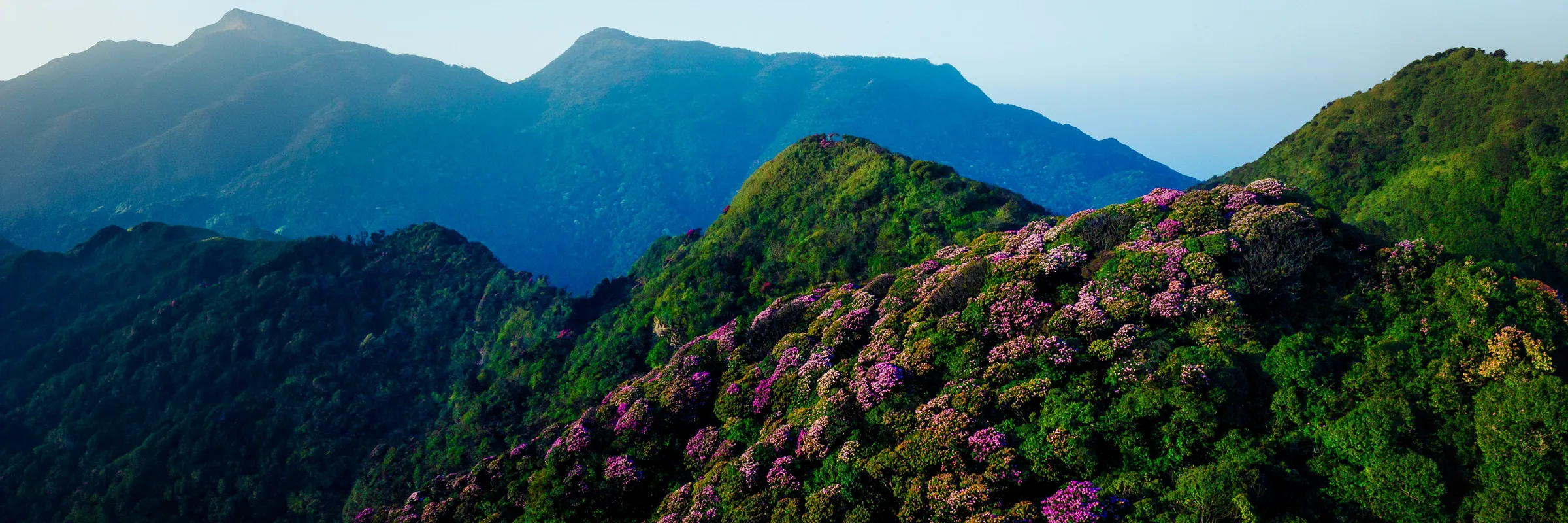
The descent from the shelter follows the Sì Thâu Chải route — not the way up, which makes this a true traverse. The trail crosses Rhododendron Peak, a secondary ridge at approximately 2,400m. More than 30 rhododendron species grow on this massif; the concentration along this ridge is the densest. Between late February and mid-April the blooms are red, pink, and white — covering the ridge in continuous colour on trees several centuries old. Outside bloom season the ridge is still extraordinary: ancient gnarled trunks, dense lichen, the specific silence of old forest.
Recovery
17:30 – 18:30 · Day 2
Red Dao Herbal Bath — Sì Thâu Chải village
The descent ends in Sì Thâu Chải, a Red Dao village most visitors to the region never reach. The herbal bath is prepared the traditional Dao way: a blend of over a dozen mountain plants — bark, roots, leaves — gathered from the surrounding forest and boiled into a dark aromatic soak at roughly 40°C. This is a functional recovery practice used by the Red Dao for generations after physical exertion. After a full day of climbing and a second day of descent — 1,300m up, 900m down — 45 minutes in that water is not optional.
More about the destination
The Kingdom of Rhododendrons — Vietnam's wildest trail.
Putaleng stands at 3,049m in the southern arm of the Hoàng Liên Sơn range, on the Lai Châu side of the massif — 20 kilometres northwest of Fansipan but in a fundamentally different world. Where Fansipan faces northeast toward the Sa Pa valley and the infrastructure that has grown around it, Putaleng faces west toward the Lai Châu basin and the Đà River drainage — a wetter, more isolated exposure that has kept the primary forest intact far longer and far denser than anything on the Sa Pa side. The mountain sits within Tả Lèng commune, Tam Đường district — a name most travellers to the region have never encountered, which is part of what makes it worth knowing. The road from Lai Châu reaches the village at the valley bottom, and above that, the trail begins on its own terms.
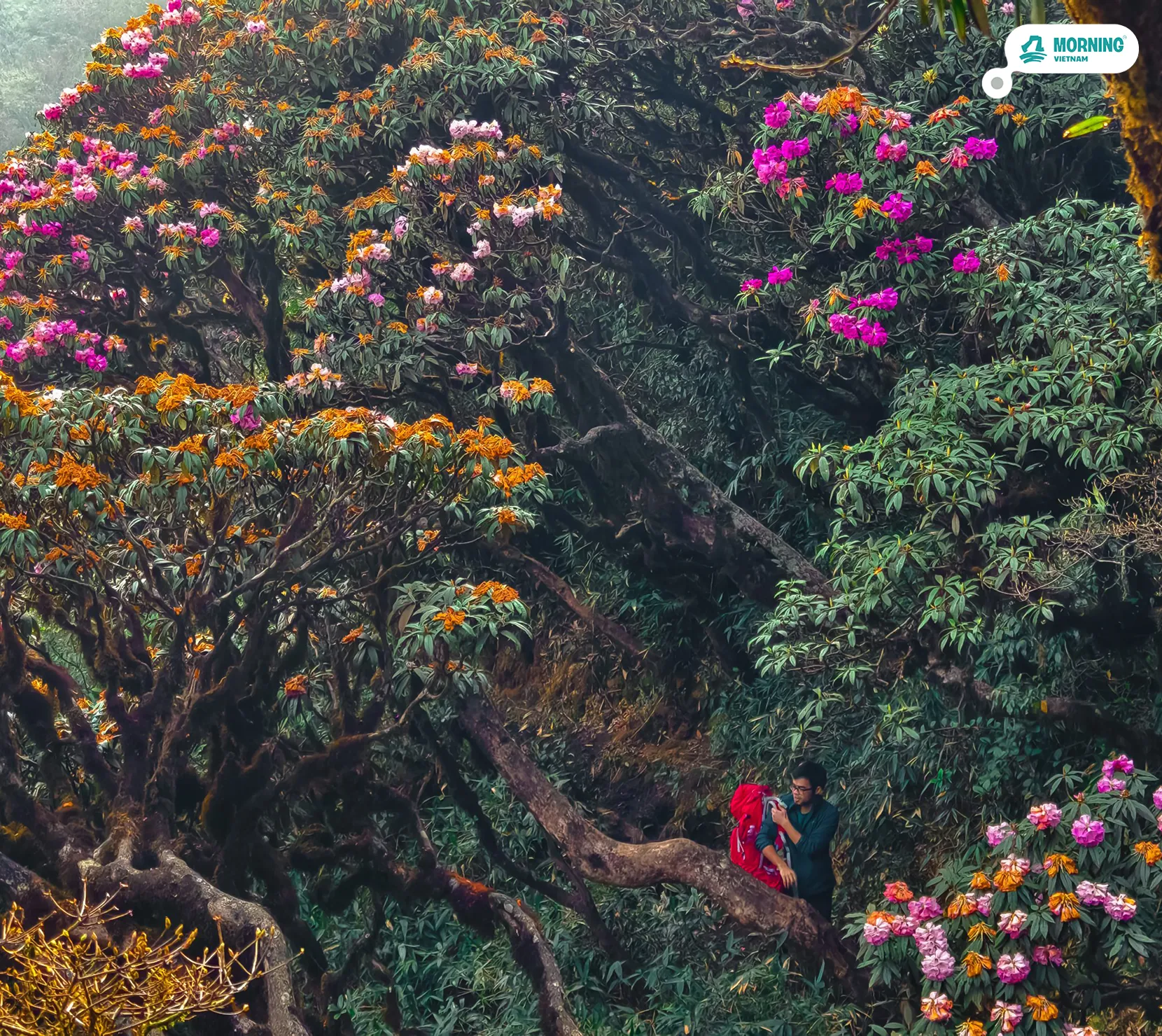
The forest on Putaleng is the main reason climbers who have done both peaks describe the experience differently. Below 2,000m: cloud forest typical of the Hoàng Liên range — dense, dark, every surface covered in moss and lichen, streams cold and constant, the bamboo belt above it so thick it disorients. What Putaleng has that other peaks in the range do not, at least not to the same density, is its rhododendron population. More than 30 species have been recorded within the massif — including ancient specimens several centuries old, with trunks broader than a person's armspan, growing along the ridge between 2,200m and 2,600m. The sub-summit on the descent route — Rhododendron Peak, at approximately 2,400m — has given Putaleng the informal title "kingdom of rhododendrons," earned between late February and mid-April when the blooms cover the ridgeline in red, pink, and white. The peak was not shaped for visitors; it was named by the people who lived beneath it.
The route from Tả Lèng to Sì Thâu Chải is a passage between two entirely distinct ethnic worlds. The approach side is H'Mông territory: stone-walled fields, the distinctive roof lines of H'Mông houses, an agricultural economy oriented to the valley floor. The descent side — Sì Thâu Chải village — is a Red Dao (Người Dao Đỏ) community, recognisable by its weaving traditions and the aromatic steam that rises from the houses where herbal baths are prepared. These two communities occupy opposite slopes of the same mountain, speak different languages, and have different material cultures — separated by a summit at 3,049m that both treat as a presence in the landscape rather than a destination. The trek covers both slopes because the trail goes where the people went first.
Sa Pa sits at 1,500m on the eastern side of the Hoàng Liên range — and the drive from Sa Pa to Tả Lèng crosses the range via tunnel or the O Quy Hồ pass, dropping from 1,500m down to the Lai Châu basin before climbing again to the trailhead. This transition is physical and visible: the air changes, the vegetation changes, the light changes. The Lai Châu side is wetter and less visited — the same mountain range, the opposite face. The Red Dao herbal bath that closes the trek at Sì Thâu Chải is a traditional medicinal practice passed down within Dao families for generations: a blend of over a dozen mountain plants gathered from the surrounding forest, brewed into a dark aromatic soak at roughly 40°C. After two days in the primary forest, the bath makes a practical kind of sense that no description does justice to.

Your welcome pack
Everything in your bag has a reason.
Your host meets you at your Sa Pa hotel with a Morning Vietnam pack before the drive to Tà Lèng. One item was chosen for a night at altitude.
Upcoming Departures
Next dates you can join.
Spots fill fast — reserve now, pay 14 days before. Free cancellation up to 7 days out.
Reserve a spot → Sat 10 Oct Reserve spot →
When to go
By season.
Putaleng is a year-round mountain for experienced trekkers — but the rhododendron bloom (Feb–Apr) and the post-monsoon window (Oct–Nov) are the seasons that define the experience.
Best conditions Good, some haze Wet season — still doable
Rhododendron season (Feb – Apr)
The Putaleng massif hosts over 30 rhododendron species — and the bloom on the Rhododendron Peak ridge and the upper trail is the reason experienced trekkers time their visit. Peak colour is mid-March to mid-April: the ridge between 2,200m and 2,600m turns red, pink, and white under a continuous canopy of blooms on trees several centuries old. February marks the start — earlier than Fansipan, because the Lai Châu side of the range is warmer and wetter.
Post-monsoon best (Oct – Nov)
Oct–Nov: clearest skies, post-monsoon air, the summit views extending across the Hoàng Liên range. The forest is at its greenest, the streams full. Temperature at the shelter (~2,522m) drops to 8–12°C at night — cold enough to matter, not cold enough to be a problem with proper layering.
Wet season (May – Sep)
We operate this route in wet season only for experienced groups: persistent cloud above 2,000m, slippery trail, leeches active in the lower forest (high socks essential). The primary forest in wet season is extraordinary in a different way — saturated moss, loud streams, green light. September often transitions; we confirm conditions 48 hours ahead.
Real travelers, real reviews
4.9
Based on 32 reviews
5★29
4★2
3★1
2★0
1★0
"Most tours feel like a museum on wheels. Morning Vietnam feels like a homecoming. The host didn't perform Vietnam — he let us in."
"Eight people, one van, three days. We have a WhatsApp group that's still active a year later. That's it. That's the review."

Your moment.
Your Vietnam.
Tours that don't perform the country to you — they let you in.
See all tours →Ready to go?
Putaleng — Only Trekking
from $113 / 2.950.000 VND /person
No payment now — reserve your spot, pay 14 days before. Free cancellation.
How fit do I need to be?
High fitness required. Day 1 gains 1,300m over approximately 10km from the trailhead — expect 6–7 hours of ascent on uneven mountain trail. Day 2 descends 900m over 13km with a partial re-ascent to Rhododendron Peak. No technical climbing, but this is serious mountain trekking. Minimum age 16.
What is the shelter like?
A basic wooden mountain shelter at approximately 2,522m — mats or wooden bunks, blankets provided. Basic toilet facilities. Not heated — expect 8–15°C at night in warm months, colder in winter. Pack a layering system regardless of season.
Can I pick up from Hanoi?
Yes — Hanoi pickup available at an additional cost of 450,000₫ per person. This means a sleeper bus or private transfer to Sa Pa the night before. We arrange logistics when you enquire.
What makes this different from the Putaleng 3D2N?
The 3D2N version adds Day 1 in Lai Châu: Pusamcap cave and a night in Lao Chải 1 H'Mông village at the foot of the mountain. The mountain trekking is identical. If you're already in Sa Pa and want to go straight to the mountain, the 2D1N is the right choice. If you want the full Lai Châu context and a slower approach, take the 3D2N.
Is the rhododendron bloom guaranteed?
No — bloom timing varies by year and altitude. The Rhododendron Peak ridge typically blooms between late February and mid-April, with peak colour in mid-March. We give honest forecasts based on current conditions. Outside bloom season the forest is still exceptional — ancient specimens, dense coverage, extraordinary moss and lichen.
What gear do I need?
Ankle-support waterproof hiking boots are essential. Trekking poles are strongly recommended for the 900m descent on Day 2. Bring a layering system (moisture-wicking base, fleece, waterproof outer), high socks against leeches in the lower forest, and a headlamp. Pack weight: 5–7kg daypack. Blankets are provided at the shelter; bring a light sleeping bag liner if you run cold.
Do I need to be fit?
Moderate fitness recommended. Most activities are walking/cycling at a relaxed pace, but some sections may include 30–60 min of uphill.
What's included in the price?
All transport, all meals, accommodation (if multi-day), all activity fees, dedicated host. You only need spending money.
When do I pay?
Reserve your spot first — no payment upfront. Pay 14 days before departure. Free cancellation until then.

Be first to know.
Drop your email/whatsapp number — we'll tell you the day this tour goes live. No spam, no marketing fluff.