The short answer
Sapa if you want altitude, Fansipan, and the famous photographs. Mai Châu if you want to live in a valley with a Thai family for two days.
Both are 4-5 hours from Hanoi. Both have rice terraces. But almost nothing else about them is the same.
Geography
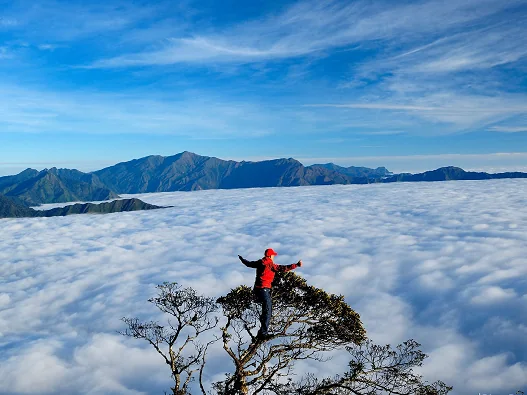
Sapa sits at 1,500m in the Hoàng Liên Son range, Vietnam’s highest mountains. You wake up above the clouds, hike up to Fansipan (3,143m — either on foot or by cable car), and look down on a patchwork of villages.
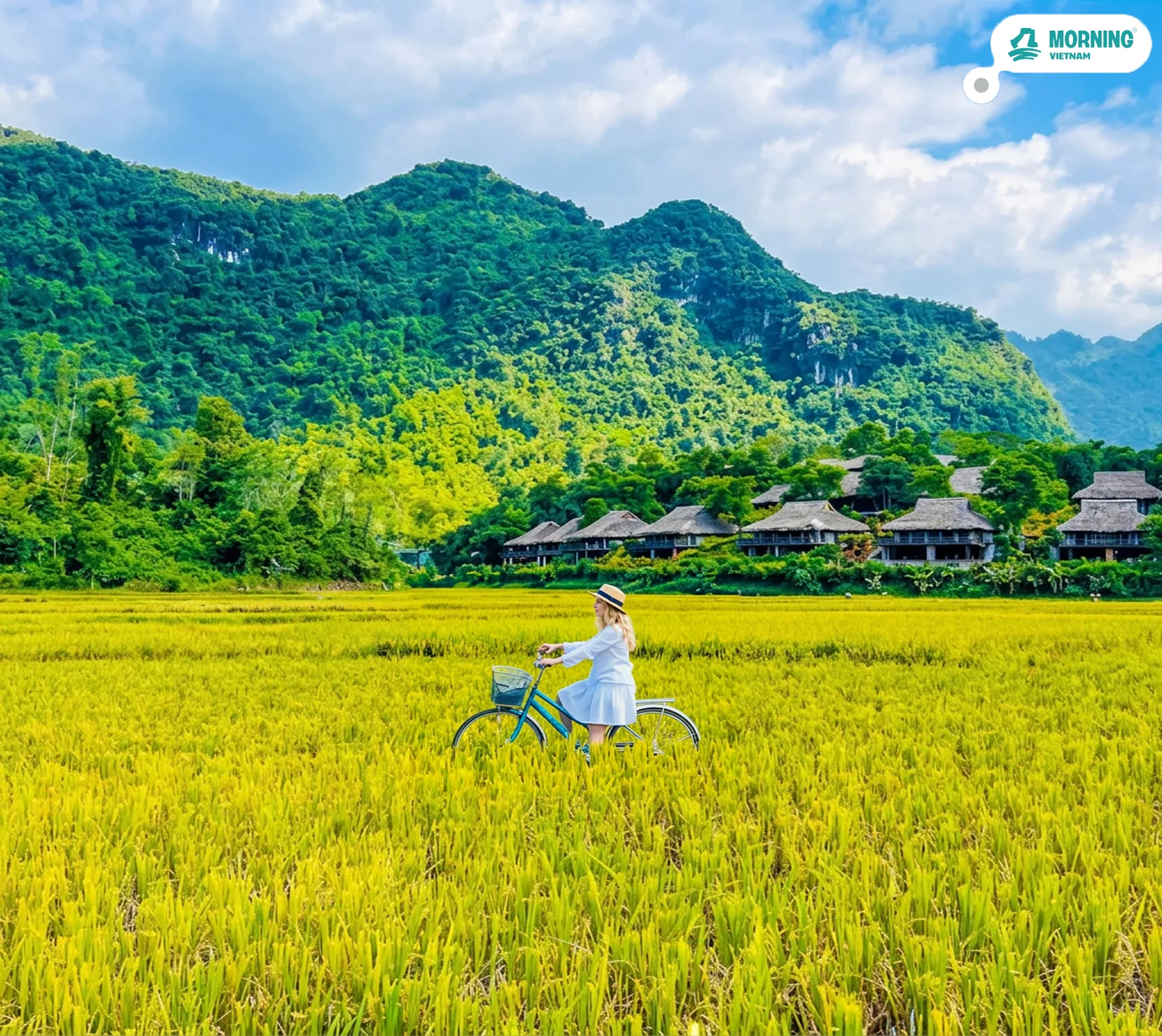
Mai Châu is a valley floor at 220m. You wake up with the valley around you, cycle to the next village over, and have lunch at a stilt house. The mountains are the horizon, not the destination.
Who shows up where
Sapa attracts travelers who want the signature shot — misty terraces, red headscarves, cable car selfies. It’s beautiful and often crowded.
Mai Châu attracts travelers who’ve been through Sapa before, or who skipped it on purpose. Our Mai Châu guests tend to be couples, solo travelers, and small friend groups who want a slower, more hands-on trip.
Season matters
Both valleys have four distinct windows:
- Jan–Feb — cool, dry, Tết atmosphere, Sapa may have mist/rain
- Mar–Apr — green season starts, both excellent
- May–Sep — monsoon, both runnable with rain-friendly alternatives, Mai Châu’s lowland rice is at its most vivid
- Oct–Dec — golden harvest in Sapa (famous), autumn clarity in Mai Châu
Which tour we’d suggest
If this is your first time in North Vietnam and you want views: Sapa.
If you’ve done the hits and want depth: Mai Châu.
Both are on our roadmap. Unlock Mai Châu runs now; our Sapa trek lands early 2027.
One last thing
Our Unlock Challenge runs differently in each valley. In Mai Châu it’s a hidden-marker game across the villages. In Sapa it’s rooted in the altitude trek — different mechanic, same spirit of turning strangers into teammates.
The destination changes. The format doesn’t.